How empties collect at a branch
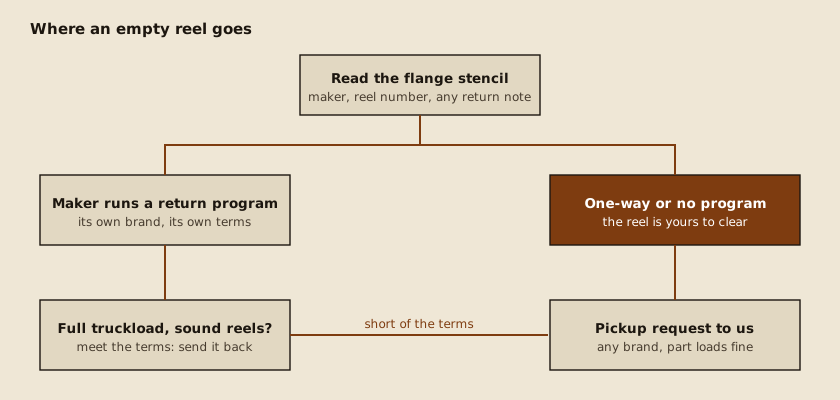
When a counter cuts cable to length for contractors, the last few feet leave a reel behind. Building wire comes on light plywood or nailed reels, and a busy branch can go through dozens a month. Some are returnable, and the branch sends those back to the maker under that maker's terms. The rest are one-way reels, and they end up in the yard behind the building, standing in the rain and getting in the way of the forklift.
Distribution warehouses see a different mix. Reels arrive under inbound freight, often with cable on them bound for a project, and leave empty once the cable has shipped out in smaller cuts. Logistics buildings in the Great Southwest district along I-30, around DFW Airport and at AllianceTexas handle this for contractors, utilities and wire distributors all at once.
Picking a schedule
| How fast empties build up | What usually works |
|---|---|
| A handful a month | Call when the corner is full; one pickup every few months |
| One or two a day | A standing pickup every few weeks |
| A truckload or more a month | A fixed weekly or fortnightly slot |
| Seasonal peaks, like a utility storm season or a big project | A base schedule plus extra pickups on request |
We don't lock anyone into a contract. If the schedule's wrong, change it.
What makes recurring pickup easy
- One spot for empties. A marked corner of the yard, away from the dock doors, where staff stand reels on their flanges.
- One contact. Somebody who can say yes to a pickup date and tell the driver which reels go.
- Returnables kept apart. If you send some reels back to a maker, keep them in a separate row so they don't go on our truck by mistake.
- A quick count before each visit. A text or email with the rough number and sizes lets us send the right truck.
Safety and housekeeping
Empty reels are awkward, heavy and round. A 60 in nailed reel weighs a couple of hundred pounds and rolls further than people expect on a sloped lot. Stacks that lean against racking or block an exit are the sort of thing a safety walk-through flags, and a reel that rolls into a truck bay can do real damage. Regular collection keeps the count small enough that nobody is tempted to stack reels three high or wedge them behind the dumpster. It also keeps the yard clear for the forklift traffic and inbound deliveries that pay the bills.
What drivers need on arrival
A dock door or a gate where a flatbed can pull alongside, a forklift with long enough forks, or a level spot where reels can be rolled up a ramp. Branch staff don't need to help load if the stack is reachable. If your site has set receiving hours, tell us, and the pickup lands inside them so it never competes with the morning rush of contractor orders at the counter.
Branches with several sites
Distributors with more than one branch in the Metroplex can book every site under one request and one contact, with each branch on its own schedule. A branch in Farmers Branch and one in Fort Worth don't fill up at the same pace, and they shouldn't be cleared on the same day just to keep things simple on paper.
Questions
Will you take only the reels we don't return to the maker?
Yes. Most branches keep returnable reels apart for the maker's program and give us everything else.
Can a pickup be added between scheduled visits?
Yes. Send a request with the count and we fit an extra visit in.
Do you take pallets and cable cut-offs too?
No. We take reels, including damaged ones and loose flanges. Pallets and cable scrap go through your usual waste and scrap channels.
Request a pickup or a quote
Count and flange size are the two things that matter. The rest helps us plan the truck.