Plants and reels
A manufacturing plant empties reels in ways a jobsite doesn't. Some arrive full of wire or cable used in production; others come with new machinery and the power and control cable to connect it; others are left over from plant expansions and upgrades. They tend to accumulate slowly at the back of a site, until someone needs the space. Garland's industrial districts, east of Jupiter Road and along the rail corridors, have many of those back lots.
A city-owned utility
Garland Power & Light is the city's municipal electric utility. Like any utility, it empties larger reels from distribution cable and conductor, and some of those are returnable to the cable maker. We collect reels that the utility or its contractors release, with machine handling for the larger sizes. As with every utility, reels on deposit go back under the utility's own arrangements.
Pickup notes for Garland
- Plants: sign-in, safety vests and escorts are common. Tell us the plant's rules when booking.
- Older industrial streets: some have tight turns and low wires. A photo of the access helps us choose the truck.
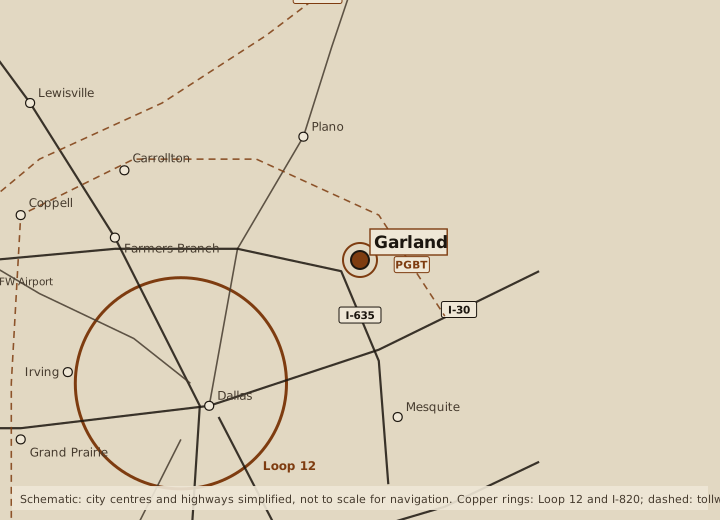
- Along I-635: newer warehouses with wide courts take a full flatbed easily.
- Routes: Garland shares routes with Mesquite, Richardson, Rowlett and Plano.
What sells from Garland
Plants and contractors here often have mid-size nailed reels, 36 to 60 in, that are sound and saleable, plus a few broken ones. A typical load is mostly reels we'd buy, with a handful for recycling, and the good reels usually cover the cost of the rest.
Spools for Garland homes and businesses
Garland buyers ask for patio-table spools, hose reels and the occasional big spool for a business sign or display. Deliveries go out with pickups on Dallas-side routes.
Clearing a plant's back lot
Plants often call when an expansion needs the land, an auditor flags the stacks, or a new manager simply wants the yard back. Reels that have stood for years are mixed: some sound, many weathered, a few rotten into the ground. We grade them from photos, quote the whole lot, and plan the trucks. If the yard has a forklift and an operator, loading goes quickly. If reels have sunk into soil, a machine has to break them free first, and we'll say so in the plan.
Rail and older districts
Garland's older industry grew up along its rail lines and around downtown. Sites there tend to be compact, with gates and turns sized for smaller trucks. Newer distribution along I-635 and the Bush Turnpike is built for full trailers.
Firewheel and the north side
North Garland around Firewheel and the Bush Turnpike is newer homes, shopping and offices. Contractors and homeowners there have occasional reels to clear and buy spools for gardens and patios. Pickups ride on Garland routes along the Turnpike.
Duck Creek and the older neighbourhoods
Garland's older neighbourhoods along Duck Creek and around downtown have garages, sheds and back yards where spools quietly age. Homeowners clearing an estate or a garage often find one or two; we'll collect them when a route passes, and they go to reuse or wood recycling instead of bulky-item collection.
Questions about Garland
Do you take reels from inside a plant?
From the yard or a loading area, once the plant releases them. Drivers follow plant safety rules.
Can you collect utility reels?
Released reels, yes, with a machine for the big ones. Returnable reels go back to their maker.
Do you cover Sachse and Rowlett?
Yes, on Garland and Mesquite routes.