Compartmental cable reels have several sections on one drum for different cables. How they're built, who uses them, and where to find them in Dallas-Fort Worth.
How nailed wood cable reels are built, the sizes they come in, how to check one and what happens to them in Dallas-Fort Worth, from reuse to wood recycling.
Plastic cable reels and wire spools: the types, what they carry, why they crack, and how they're reused or recycled in Dallas-Fort Worth.
Plywood cable reels explained: how they're built with bolted flanges, the sizes they come in, why rain ruins them, and how they're reused or recycled around Dallas-Fort Worth.
Steel cable reels and wire rope reels: who owns them, why they go back, how to spot one, and what happens to steel reels collected in Dallas-Fort Worth.
Large wooden cable drums of 84 in and up: how they're built, what they carry, what they weigh, and how they're moved, reused and repaired in Dallas-Fort Worth.
Telling them apart at a glance
| Look for | It's probably |
|---|---|
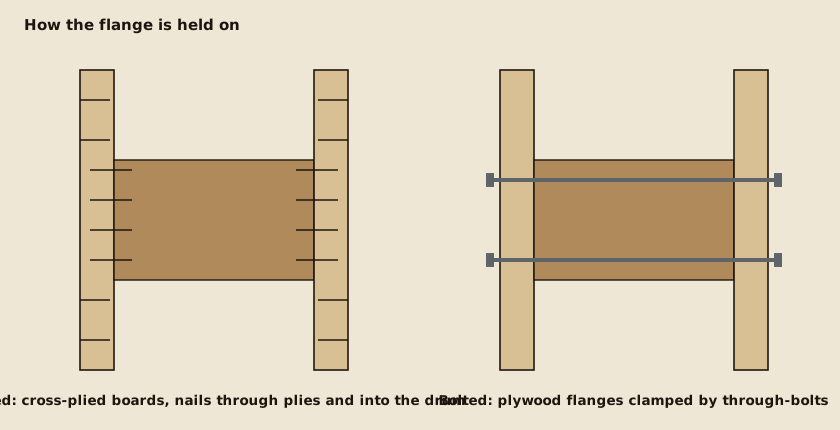
| Board flanges with nail heads in rings around the drum | A nailed wood reel |
| Smooth sheet flanges with layered edges and four or more bolt heads | A plywood reel |
| A very large board reel with heavy staves and steel arbor plates | A wooden cable drum |
| One-piece or snap-together molded flanges | A plastic reel |
| Welded or pressed metal flanges, often painted | A steel reel |
| Extra flanges partway along the drum, dividing it into sections | A compartmental reel |
Which builds go back to their maker
Steel reels almost always belong to their maker or to a reel rental company and are expected back. Some nailed wood reels are returnable under a maker's program, such as Service Wire's for its own 30 to 72 in nailed reels, or Southwire's program with its own pickup form. Most plywood and plastic reels, and many nailed reels, are one-way: the maker doesn't want them back. Our guide to returnable and one-way reels explains how to tell.
Which builds we buy, reuse or recycle
- Nailed wood reels are the backbone of the yard. Sound ones in common sizes are bought and resold; broken ones are taken apart for wood recycling.
- Plywood reels are reused if dry and sound. Once the plywood delaminates they're recycling.
- Wooden drums are often worth repairing because they're expensive to build new.
- Plastic reels go to reuse first and plastics recycling if cracked.
- Steel reels are set aside for their owner, or go to metal recycling where nobody claims them.
- Compartmental reels have a small, steady resale market.
Why build matters for weather
North Texas reels spend months outside on jobsites. Nailed board reels cope best: the wood weathers, but the reel stays together. Plywood reels soak up water through their edges and start to come apart after a wet season. Plastic reels get brittle under constant sun. Steel reels rust at the welds if water sits in the drum. If you're storing reels for a while, the build tells you which to protect first.
Hybrids and oddities
Not every reel fits neatly. Some plywood reels have board-built drums; some nailed reels use plywood flange discs over boards; a few makers use fibreboard or composite drums on otherwise wooden reels. Cardboard and fibre reels exist for very light products and aren't really part of this trade. Collapsible metal reels, used in some plants, are always returned. If you can't tell what you've got, send a photo of a flange face and the edge of a flange and we'll say.
Lagging and protection
Full reels often arrive with lagging boards nailed around the outside, or with a plastic or cardboard wrap, to protect the cable. Lagging is usually pulled off on site and either thrown away or left in a pile. Loose lagging boards can come with a pickup, but they don't change what a reel is worth.
Builds by industry
Different trades leave different reels behind. Electrical contractors on commercial work mostly empty plywood reels and mid-size nailed reels. Utilities and co-ops leave large nailed reels and drums, plus the occasional steel reel that has to go back. Fiber crews leave plastic and plywood reels and some big wooden ones for long trunk runs. Wire and cable plants handle every build, often their own returnable fleet alongside one-way reels from suppliers. Rope and wire rope users favour heavy nailed reels and steel. Knowing the source of a stack is often enough to guess what's in it before the photos arrive.
Choosing a build when you buy
For heavy cable or rope, choose nailed wood or a drum. For light wire kept indoors, plywood or plastic is fine and costs less. For anything stored outdoors for long, nailed wood lasts best. For tables, nailed reels give a rustic board top and plywood a flat smooth one.
A short history in one yard
Wooden reels have carried cable since telegraph days, and the basic nailed design has barely changed. Plywood arrived as wire makers chased lighter, cheaper packaging for building wire. Molded plastic followed for small-gauge products, and returnable steel became standard for the heaviest loads and the longest working lives. Today a single Metroplex jobsite can hold all six builds at once, each from a different supplier, each with its own rules about where it goes next.
Questions
What's the strongest type of reel?
Steel reels, for their size, followed by heavy nailed wood drums. Plywood and plastic reels are made for lighter cable.
Can plywood reels be repaired?
Rarely economically. Their flanges are one sheet, and once a flange cracks or delaminates it needs replacing.
Who owns a steel reel?
Usually its maker or a reel rental company. Check for a name and a number stamped on the flange.