What counts as a wire spool
| Spool | Typical size | What it carried | Where it goes |
|---|---|---|---|
| Plywood reel with steel bolts | 12 to 36 in flange | Building wire, data and control cable | Reuse if sound; otherwise the wood is recycled and the bolts separated |
| Plastic spool, one piece | Under 12 in up to about 30 in | Small-gauge wire, welding wire, fiber patch cable | Reuse by small shops and makers, or plastics recycling |
| Plastic reel, sectional | 18 to 36 in | Low-voltage cable, fiber | Reuse; the sections can be replaced |
| Small nailed reel | 18 to 30 in | Service-entrance cable and similar | Reuse or wood recycling |
| Compartmental reel | Varies | Several cables wound side by side | Reuse; there's a steady market for them |
How spools build up
Electricians, low-voltage installers and maintenance shops don't empty one spool a week, they empty several. They're small enough to toss in a truck bed or a skip, which is exactly where most of them go. A single plywood spool hardly matters; a year of them from a busy contractor fills a container. Data cable installers on large commercial jobs, and plants that run wire through their own machines, can go through hundreds.
Plastic spools need their own route
Plastic spools don't go with wood. Many are made from high-impact polystyrene or similar rigid plastics, which shatter rather than bend, and they're only recyclable where an outlet takes that kind of plastic. The better route is reuse: small spools are wanted by wire shops that rewind cut lengths, by makers and hobbyists, and by anyone storing extension cords, rope or garden hose. Sound plastic spools rarely need recycling at all. Cracked or brittle ones go to a plastics outlet where one is available.
Plywood spools are wood and steel
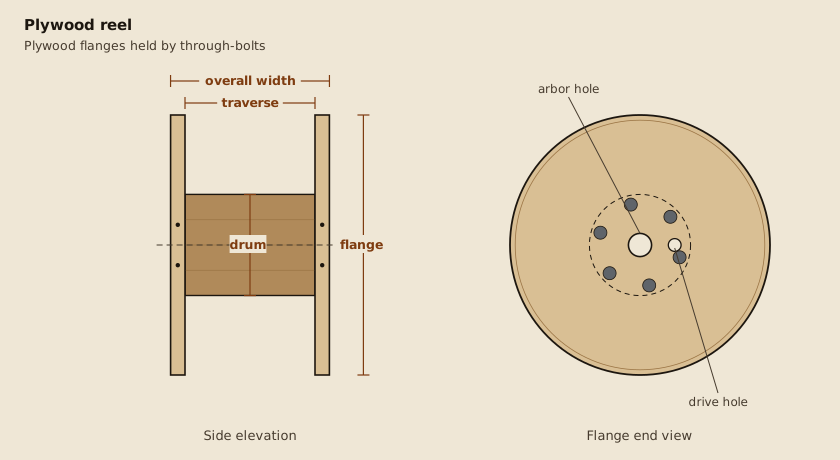
A plywood spool has two plywood flanges held to a drum by long steel bolts or rods. To recycle it, the bolts come out first. That makes plywood reels slower to process than nailed reels of the same size, and the glue in plywood limits some wood outlets, so sound plywood reels are worth reusing wherever possible. A plywood reel that has stood in the rain for a season usually isn't sound: water gets into the edges of the flange and the layers separate.
Who wants used spools
Small reels have a surprisingly wide second market. Electrical shops that sell cable by the foot rewind cut lengths onto them for customers. Rope, chain and cord sellers use them in the same way. Farms and ranches use 24 to 36 in spools for hose, fencing wire and drip line. Makers turn them into side tables, plant stands and display racks for markets and shops. Craft and event businesses buy the smallest plywood spools by the dozen. That demand is why a box of sound spools isn't waste, and why sorting them from the broken ones before recycling is worth the trouble.
Spools from offices and data rooms
Data-cable spools also come out of offices, schools, hospitals and server rooms after a cabling refresh. Facilities managers often find a dozen plywood spools and a pile of plastic ones left behind by the installer. They're light enough to move by hand, so stage them near a loading door and we'll collect them with other stops in the area.
Getting spools ready
- Box or bag the small ones. Plastic spools under about 12 in travel best in a gaylord box or a bulk bag.
- Stack plywood spools on their flanges. Keep them out of standing water.
- Separate plastic from wood. It saves time at the truck.
- Strip the last of the wire. A few feet of wire left on a spool is common; we can't take spools with substantial cable on them.
Questions
Is there a minimum quantity for spool pickup?
Spools are best collected with other reels, or once there's a container's worth. Send the count and we'll suggest timing.
Do you take welding wire spools?
Yes, plastic and wire-basket welding spools, as long as they're empty.
What about cardboard spools and reels?
Cardboard cores and fibre drums go with paper recycling, not with us; it's simpler and cheaper for you to put them in your cardboard bin.
Request a pickup or a quote
Count and flange size are the two things that matter. The rest helps us plan the truck.