Where contractors' reels come from
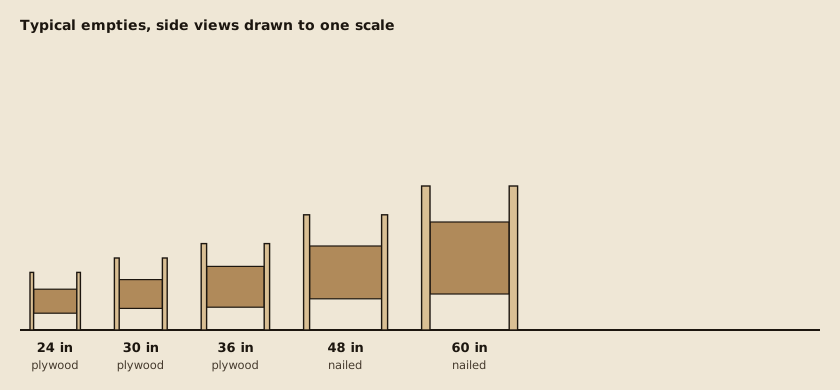
Commercial and industrial work generates the most: feeders, branch wiring, MC cable, controls and low-voltage. Multi-family projects across the northern suburbs produce steady numbers of 24 to 36 in reels. Industrial plants, hospitals and schools leave larger reels from service entrances and feeders. And data-centre and utility jobs, when a contractor lands one, produce reels by the hundred.
Most contractors carry cable from several makers on the same job, bought from whichever distributor had it in stock. That's why contractors' stacks are always mixed: Southwire, Encore Wire, Cerro and others side by side, nailed and plywood, small and large.
The take-back problem
Contractors are often told the maker will take the reels back. Sometimes that's true. Service Wire's free return program accepts its own labelled nailed reels of 30 to 72 in, by the full truckload, with at least 75% of the drum staves intact. Southwire has a return program with its own pick-up request form. But Encore Wire, which supplies a huge share of the building wire on DFW jobs from its McKinney campus, has no published reel take-back program that we could find, so its reels stay with the contractor. And many reels from every maker are stencilled one-way.
A typical contractor's stack therefore has a few reels that qualify for a program, if someone sorts them and waits for a full truck, and many more that don't. We take the lot. If some qualify for a program and you'd rather use it, we'll point them out.
Shop yard or jobsite
- Shop yard pickup. Reels brought back from several jobs, collected when the stack is big enough. A recurring visit every month or two suits many contractors.
- Jobsite pickup. Reels collected straight from the site, which saves your crews hauling empties back. Best for bigger jobs with a laydown yard.
- Both. Many contractors use jobsite pickup on large jobs and a shop pickup for everything else.
What helps us quote
Count and rough flange sizes, a photo of the stack, the ZIP code, and whether there's a forklift. If the reels are at a jobsite, the gate hours and any badge or safety requirements. That's enough for a firm quote.
Selling reels you'd like back
Some contractors buy reels too: a few 36 or 48 in reels to rewind cable returned from a job, or a matched set for cutting their own feeders. We can deliver reels you need on the same visit as collecting the ones you don't.
Keeping empties worth something
Reels stored on the ground in a corner of the yard lose value every month. Rain soaks the lower flange, nails rust, plywood delaminates. Standing reels on their flanges on gravel, keeping plywood ones under cover, and booking a pickup before the stack gets big keeps more of them saleable, which can make the difference between a free pickup and a charged one.
Small jobs count too
Service work, tenant improvements and residential jobs leave just a few reels each, but over a year a busy shop collects dozens. They're often the reels that get forgotten, tucked behind a container or under a shelter, until they're too weathered to sell. A standing pickup every couple of months catches them while they're still worth something, and it frees the corner of the yard for material you actually need.
Safety in the shop yard
Loose reels are a common cause of yard injuries: a reel rolling off a stack, a foot caught under a flange, a back strained lifting a 36 in reel alone. Keep empties standing on their flanges, chocked if the ground slopes, and use a forklift or a hand truck for anything over about 30 in.
Questions
Will you collect from a job that's still running?
Yes. Most jobsite pickups happen during the job, not after it.
Can you take reels from our service trucks?
If your crews bring empties back to the shop, we collect them there. We don't collect from individual trucks.
Do I need to separate brands?
No, unless you plan to return some reels to a maker yourself.