Who owns a steel reel
Steel reels are expensive, so somebody is tracking each one. Cable makers lend them to customers and expect them back; Southwire, for example, publishes its own policy for steel reels alongside its reel return program. Reel rental companies lease them out by the month. Wire rope suppliers ship crane and winch rope on them. Large plants keep their own fleet for moving product between buildings. The reel number stencilled or stamped on the flange ties it to an owner and often to a deposit.
What to do with a steel reel on your site
- Look for the owner's name and a number. It's usually on the flange, near the rim or the arbor.
- Check your paperwork. The delivery ticket for the cable often shows a reel deposit or a return requirement.
- Contact the supplier. The distributor that sold the cable will usually know how the maker wants steel reels returned.
- Set it apart. Don't let it go on a truck with wooden empties by mistake.
If none of that works, and nobody claims the reel, it's yours to dispose of. A sound steel reel can be resold for reuse; a damaged one goes to metal recycling.
When we find steel reels
We don't load steel reels with a wooden reel pickup unless you've told us they're yours to release. If they turn up in a stack, we set them aside and tell you. Where a site has unclaimed steel reels that it wants gone, we'll collect them for reuse or scrap once the site confirms in writing that nobody else owns them.
Weight and handling
A steel reel weighs far more than a wooden one of the same size. They rarely flex or crack, but they dent, and a dented flange stops a reel winding straight. Handle them with a forklift or a crane, and don't roll them off trucks. Bare steel on concrete also slides more than wood does, so chock them carefully.
Rust and damage
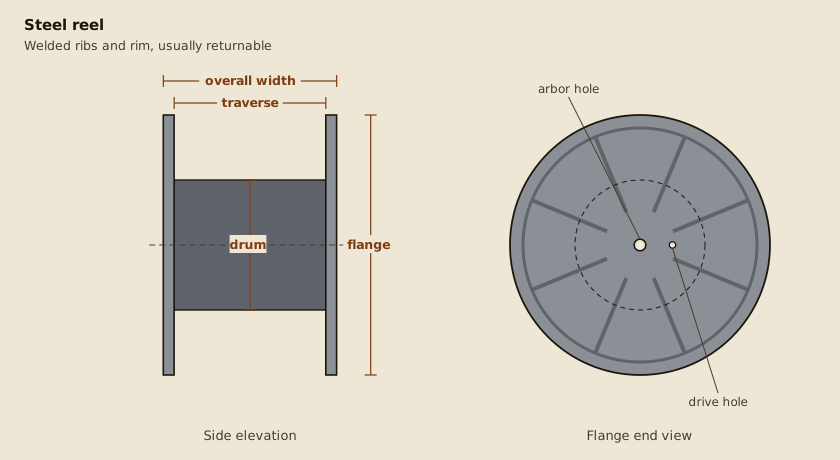
Steel reels rust at welds and inside the drum where water collects. Light surface rust doesn't matter much; rust that's eaten through a flange rib or a weld does. Bent flanges, cracked welds and a damaged arbor bushing all take a reel out of service until it's repaired, and repair is a job for the owner or a fabricator.
Steel reels and wire rope
Crane rope, winch line and elevator rope are often supplied on steel reels because the rope is heavy, the reel goes back and forth many times, and the arbor has to take serious braking loads. Wire rope users in the Metroplex, from crane rental yards to oilfield suppliers, tend to have a returns arrangement with their rope supplier. Our page on rope and wire rope covers the wooden reels they also use.
Common mix-ups
A painted wooden reel is sometimes taken for steel at a distance; tap the flange and listen. Galvanised wire baskets used for welding wire look like small steel reels but are usually one-way packaging, recycled as scrap metal. Collapsible steel reels used inside plants have removable flanges and are never meant to leave the building. And aluminium reels, rarer still, belong to their owners just as steel ones do and should be returned the same way.
Why owners want them back
A fabricated steel reel can cost many times what a wooden one does, and its value lies in repeated trips: dozens of fills over many years. Every reel that goes missing is a cost the owner spreads across customers through deposits and rental charges. Returning reels promptly, with their numbers recorded, keeps those charges down for everyone in the supply chain, including the contractor whose cable comes on them.
Painted steel reels often carry a colour code linked to their owner, which helps when stencils have faded.
Questions
Is there a deposit on steel reels?
Often. The cable invoice or the delivery ticket should say. Returning the reel gets the deposit back.
Can I scrap a steel reel I found on site?
Only once you're sure nobody owns it. Contact the cable supplier first.
Do you buy steel reels?
Only reels released by their owners. Unclaimed reels can be collected for reuse or scrap.