How to tell
| Sign | Usually means |
|---|---|
| "Returnable", "return to" or "property of" stencilled on the flange | Returnable; the owner wants it back |
| A reel number and the owner's name stamped on a metal tag or plate | Returnable or tracked |
| A deposit line on the cable invoice | Returnable, and worth money back |
| "Non-returnable", "one-way" or "do not return" on the flange | One-way |
| A steel reel | Almost always returnable |
| A plain plywood reel with no markings | Almost always one-way |
| A plain nailed reel with only the reel maker's mark | Usually one-way, but check the invoice |
Why makers use one-way reels
Collecting reels costs money: trucks, sorting, inspection and repair. For light cable on cheap plywood reels, it's cheaper for the maker to buy new reels than to bring old ones back from every jobsite in the country. For heavier cable on sturdy reels, return programs can make sense, but usually only for the maker's own reels in good condition and in big enough numbers to fill a truck.
Programs with conditions
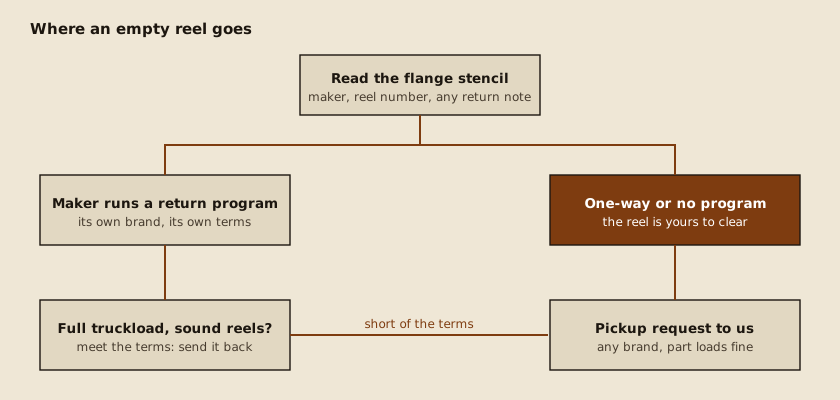
Service Wire's free reel return is a good example. It takes only Service Wire-labelled nailed wood reels with 30 to 72 in flanges, by the full truckload, with at least 75% of the drum stave boards intact and undamaged arbor and drive holes. Southwire runs a reel return program with a pick-up request form, and publishes a separate policy for its steel reels. Reel makers themselves have a stake too: Sonoco describes its nailed wood reel flanges as returnable and refurbishable. Each program has its own rules, and our guide to manufacturer return programs goes through them.
Encore Wire
Encore Wire, the McKinney building-wire maker, is one of the most common names on DFW reels. We could find no published reel take-back program from Encore Wire, so plan to treat its reels as one-way unless your supplier confirms otherwise in writing. See does Encore Wire take reels back.
What to do with each kind
- Returnable with a deposit: send it back through the program or the distributor; the deposit is usually worth more than any resale.
- Returnable without a deposit: return it if the program's terms fit, such as a full truck and the right condition; otherwise ask the owner whether they'll release it.
- One-way: sell it, reuse it or recycle it. That's where we come in.
- Unsure: keep it apart and ask the distributor who sold the cable.
A mixed stack
Most laydown yards have both. Set the returnables apart in their own row with their tags, and the rest can go on one pickup. Our page on mixed-brand loads explains how we handle them.
Why the difference matters on a jobsite
Mixing up the two costs money in both directions. Send a returnable reel away with a load of one-way empties and you may lose a deposit, or get a bill from the reel's owner months later. Hold one-way reels back because you think someone might want them, and they take up laydown space, collect rainwater and termites, and eventually go to waste anyway. A five-minute check of stencils and invoices when the reel comes off the cable saves both mistakes.
Who owns a returnable reel
Usually the cable maker, sometimes a reel leasing company, and occasionally a utility or a large contractor that owns its own reel fleet. The owner's name is normally stencilled or stamped on the flange, or on a metal tag fixed to it. If the name isn't familiar, ask the distributor who sold the cable: they'll know who to call.
Keeping track on a big job
On projects with dozens of reels arriving over months, keep a simple reel log: reel number, maker, size, date received, date emptied, and whether it's returnable. Mark returnables with spray paint or a tag when they're emptied, and stand them in a separate row. That log is what lets you claim deposits, book a maker's truck when a program applies, and hand the rest over for pickup in one clean visit at the end of each phase.
What we do with each kind
We collect one-way reels of any brand and build. Returnable reels stay where they are, for their owner, unless you show us they're yours to clear. If you're not sure about a reel, tell us when you book and send a photo of its flange; we'll tell you what the markings usually mean.
Plastic and small spools
Small plastic spools for data and control cable are nearly always one-way, and so are light plywood reels under about 24 in. Some heavy plastic reels used for fibre-optic cable are tracked and returnable, with the owner's name moulded into the flange. As with wooden reels, the flange markings and the invoice tell you which is which.
Quick rule of thumb
Steel, stamped, tagged or invoiced with a deposit: assume returnable and check. Plain wood or plywood with only the reel maker's mark: assume one-way. Anything in between: ask the distributor before it leaves your yard, because a question is free and a lost deposit isn't.
Disputes
If an owner later claims a reel, your log and photos will settle it quickly.
Questions
Can I sell a returnable reel?
Not one that belongs to someone else. Return it, or get the owner's written release first.
What if a returnable reel is damaged?
The owner usually still wants it back, or wants to be told. Check the program's terms.
Are plywood reels ever returnable?
Rarely. Most are one-way.