Broken flanges, torn arbor holes, rot: damaged wooden spools from DFW sites still get picked up and recycled. What counts as damaged.
Cable reel disposal in DFW: why big reels don't belong in a roll-off, and how pickup and recycling clears them instead.
Wood reel recycling in North Texas: where DFW's empty reels go, from reel makers' recycling in Denton to reuse and wood recovery.
Wire spool recycling for DFW electrical contractors and branches: wood, plywood and plastic spools sorted and recycled by type.
The order we try things in
Recycling is the last step, not the first. Every reel that comes off a truck is looked at in turn:
- Back into service. A reel with tight staves, intact flanges and a round arbor hole can carry cable or rope again, and that's worth more to everyone than its wood.
- Repair. A reel with a split stave or a loose flange board can sometimes be put right with new lagging or fresh nails. Whether that's worth doing depends on the size.
- Second use. Reels too worn for cable but sound enough to stand on make tables, hose reels, garden spools and ranch feeders.
- Wood recycling. What's left is broken down. Nails and bolts come out with magnets; the wood goes to grinding for mulch, animal bedding, biomass fuel or composite products, depending on the outlet.
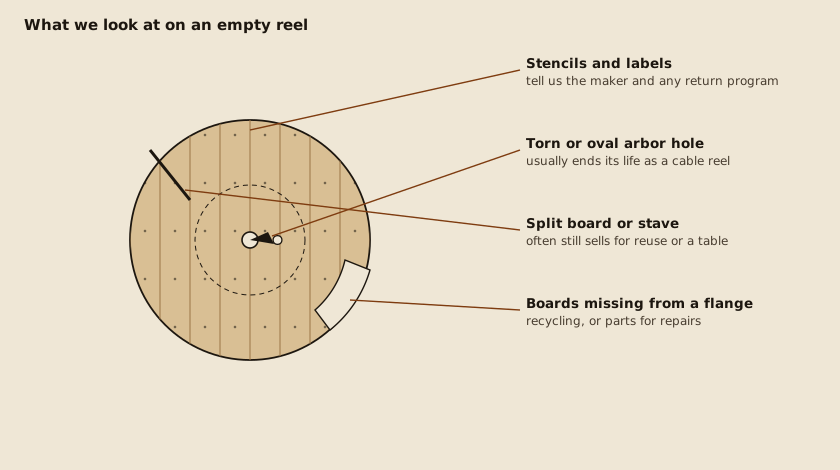
What counts as recycling only
- Flanges cracked through, delaminated plywood or missing flange boards
- Arbor holes worn oval, split or torn out
- Drum staves missing, broken or rotten
- Wood soaked in oil, paint or chemicals, which we need to know about before pickup
- Reels crushed under equipment or burnt
Our guide to what makes a reel unusable goes through each one with photos you can compare against.
How recycling and selling fit together
Most loads are both. A typical jobsite stack has some reels worth buying, some worth reusing, and a few fit only for recycling. You don't need to split them: one request covers the lot, and the quote says which is which. Selling the good ones usually offsets the cost of taking the broken ones, which is why a mixed load often costs nothing to clear. A load that's all broken reels is different, and we'll tell you up front what it costs to collect.
Wood reel recycling in North Texas
North Texas has real capacity for reel wood. Madem-Moorecraft's reel plant in Denton recycles wooden reels as part of its operation, and the region's wood grinders and mulch yards take clean, nail-free wood. Our page on wood reel recycling in North Texas explains where reel wood goes and what limits the options.
Why landfill is the worst option
A dumpster seems simple until the hauler sees reels in it. Big wooden spools are bulky, hollow and awkward; they fill a roll-off far faster than their weight suggests, and many haulers charge extra or refuse them. In landfill, reel lumber takes up space it doesn't need to and its nails and bolts are lost with it. Clean, sorted reel wood has buyers and outlets across North Texas, from mulch and compost producers to biomass users, and the steel in a bolted reel is worth separating. Sending the lot to landfill pays twice: once for the dumpster, and again in the value thrown away.
What we don't take
We don't take general construction waste, pallets, cable scrap or hazardous materials. If the reels are mixed into a skip with other waste, they'll need separating first. And treated or contaminated wood needs a conversation before pickup, because it can't go to the same outlets as clean reel lumber.
Questions
Is reel recycling free?
Often, when the load includes reels we can reuse or sell. Loads that are all broken reels usually carry a charge, which we quote before pickup.
Do you recycle plastic and steel reels too?
Yes. Plastic reels go for reuse or plastics recycling, and steel reels for return, reuse or metal recycling.
Can I drop reels off?
Ask first. We plan pickups to come to you, and we'll confirm whether a drop-off can work for your load.
Request a pickup or a quote
Count and flange size are the two things that matter. The rest helps us plan the truck.