Choosing the size
| Flange | Table it makes | Seats | Empty weight to plan for |
|---|---|---|---|
| 24 in | Side table or plant stand | Not a dining table | About 23 to 24 lb |
| 30 in | Coffee table or small bistro table | Two | About 39 lb |
| 36 in | Patio or kitchen table | Two to four | About 64 to 77 lb |
| 42 in | Dining table | Four | About 90 to 100 lb |
| 48 in | Large patio or bar table | Four to six | Roughly 106 to 177 lb |
| 60 in and up | Outdoor centrepiece, community table | Six or more | 187 lb and up; needs a machine to move |
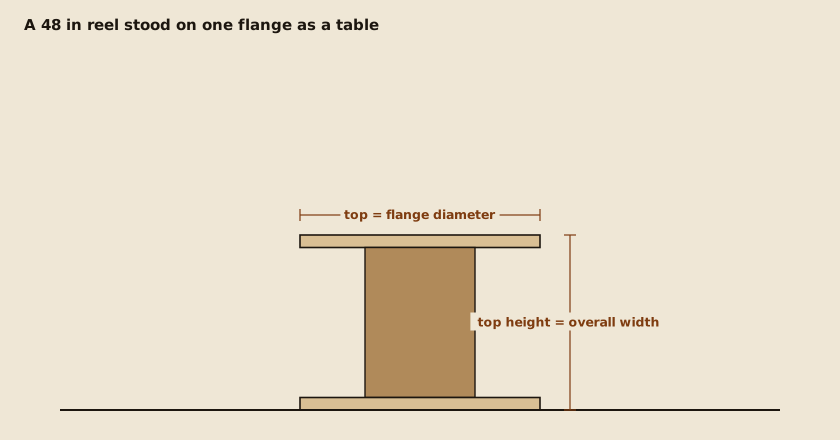
Weights are for empty nailed reels from the Okonite reel tables and vary with the build. Height matters too: a reel's height on its side is its traverse plus two flange thicknesses, so a 36 in reel with an 18 in traverse makes a low coffee table, while one with a 24 in traverse sits close to a standard side-table height. Dining height, around 29 to 30 in, usually means a reel with a wide traverse, legs, or a riser under the base.
What makes a good table spool
- A flat top flange. No warping, no deep cracks across the boards, nail heads that can be set below the surface.
- Plywood or boards? Board flanges look rustic and take sanding well. Plywood flanges are flatter but can't be sanded deep without showing glue lines, and they don't like rain.
- Bolts. Plywood reels have steel bolts running through both flanges. They can stay as a feature or be cut flush, but they need planning around if you'll fit a glass top.
- The arbor hole. It's a ready-made hole for a patio umbrella in the middle of the table, or something to fill with a wooden plug.
- Stencils. Some people want the maker's stencil kept; others sand it off. Tell us which and we'll look for a spool to suit.
Finishing a spool table
Our spool table guide goes step by step, but the outline is: wash the reel and let it dry fully, set or pull any proud nails, sand the top flange from coarse to fine grit, fill cracks and the arbor hole if you're not using it, and seal everything, including the underside and the drum, with an exterior finish if it's going outside. Texas sun is hard on bare wood; an unsealed table greys and checks in one summer.
Indoors or outside
Spools that carried cable outdoors for months may have dirt, grease or cable lubricant on them. For an indoor table, wash thoroughly and let the wood dry for several days before sealing. For outdoor use, keep the base off bare soil, use pads or feet so water drains away, and recoat the top each spring. We sell reels that have been used and stored outside, and we'll say if a particular reel shows grease or staining.
Bar, café and restaurant tables
Hospitality buyers often want several matching spools for a patio or taproom. Matching is easiest in the 30 to 42 in range, where reels come through in numbers. Ask for the same build, flange material and traverse across the set, and allow a little time for us to gather them. Commercial settings take more wear than a backyard, so plan on a hard-wearing finish and protective feet or glides on the lower flange.
Delivery
A 36 in spool fits in the back of most pickups and can be moved by two people. From 48 in up, plan on delivery to the spot where it will stand, or have a ramp and a way to control it on the way down. Large spools roll further and faster than people expect.
Questions
Do you sell finished spool tables?
No. We sell the spools; finishing is up to you or your builder.
Can I see the actual spool before buying?
For single spools, yes, we'll send photos of the one you'd get.
Are reels treated with chemicals?
Most cable reels are untreated wood. If a reel shows signs of treatment, we'll tell you, and we don't suggest those for indoor or food use.
Request a pickup or a quote
Count and flange size are the two things that matter. The rest helps us plan the truck.