What ranches use spools for
| Use | Reel size that usually works | What to look for |
|---|---|---|
| Fence wire and barbed wire | 36 to 60 in | A round arbor hole so the reel turns on a bar or a trailer spindle |
| Poly pipe and drip line | 48 to 72 in | A wide traverse to take the coil without crushing it |
| Water hose by the barn or stock tank | 30 to 48 in | Any sound reel; a pipe through the arbor and two posts make a stand |
| Hay or mineral feeder stand | 48 to 72 in | Thick flanges and a solid drum; weathered faces are fine |
| Shop and outdoor tables | 36 to 60 in | A flat top flange |
| Saddle and tack stands | 24 to 36 in | A small, solid reel, often cut down |
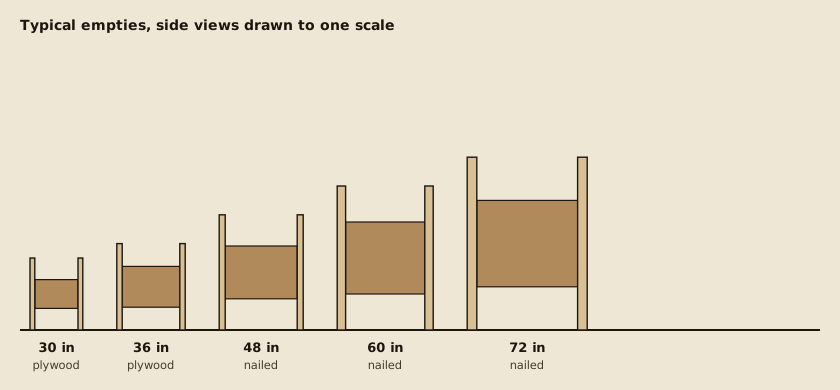
Nailed reels for outdoor work
Ranch reels live outside, so build matters more than looks. Nailed wood reels with board flanges stand up to rain and sun far better than plywood, which delaminates once water gets into its edges. Larger reels have thicker flange boards and heavier staves. Steel reels are tough but rarely available for resale and too heavy for most ranch jobs. If a reel is going to stand in a pasture, choose nailed.
Unrolling wire from a reel
The classic set-up is a bar or a length of pipe through the arbor hole, resting on a frame in a pickup bed or on a trailer, so the reel turns as wire is pulled off. The arbor hole needs to be round and the bar a sensible fit; a sloppy hole lets the reel wobble and the wire tangle. Add a simple brake, even a board pressed against the flange, so the reel doesn't overrun when you stop pulling. Never let anyone stand in front of a loaded reel being unwound at speed.
Big reels on rough ground
Large reels are heavy and roll easily. A 72 in reel weighs several hundred pounds empty, and on a slope it'll roll a long way before it stops. Move big reels with a tractor and forks, a front loader with a spear, or a winch, not by hand. Stand them on their flanges on level ground, and chock them if they're near a fence, a pen or a building. Our guide on moving large spools covers the safe ways to handle them.
Delivery to a ranch
We deliver to ranches and farms across the Metroplex and the corridor north to Sherman. Tell us what the ground is like where the reels will go, and whether you have a tractor with forks or a loader. Gates, cattle guards and soft tracks after rain all affect whether a flatbed can reach the spot, so a quick description or a photo of the access helps us plan.
How many to buy
A ranch that rebuilds fences each year might want half a dozen reels for wire. One that's laying a new water line needs a couple of big ones for pipe. Most buy one or two to start, then more once they've found the size that suits. If you're not sure, tell us the job and we'll suggest a size.
Pests, moisture and wood life
Reels standing in tall grass hold moisture against the lower flange and invite termites and rot. Mow around them, or set them on a few concrete blocks. A coat of linseed oil or an exterior stain each year slows weathering on reels you want to keep looking good.
Questions
What size spool do I need for barbed wire?
Barbed wire usually comes on small spools of its own; for rewinding or storing several rolls, a 36 to 48 in reel works.
Can a spool be used as a cattle feeder?
Ranchers do use large reels as feeder stands. Make sure there are no loose nails, broken boards or bolts that could injure stock.
Will a spool last outside?
A sound nailed reel will last years outdoors if it's stood off the soil on its flanges.
Request a pickup or a quote
Count and flange size are the two things that matter. The rest helps us plan the truck.