Why the dumpster doesn't work
A 48 in reel is four feet across and as wide as a car door. Two or three of them fill a small roll-off container, and they leave hollow space around them that the hauler is still charging you for. Larger reels don't fit through the doors of a standard container at all. Most waste haulers either charge extra for bulky items like reels or turn them away, and municipal bulky-item collections in the Metroplex are set up for furniture and appliances from homes, not industrial reels from a business.
The other ways people try
| Approach | What goes wrong |
|---|---|
| Leave them for the next tenant or the landlord | The lease usually says the yard must be clear; it becomes a cost at move-out |
| Roll them into a corner and forget them | They rot, collect water and pests, and become a hazard |
| Give them away online | Fine for one or two nice reels; nobody comes for sixty mixed ones |
| Burn them | Restricted under Texas outdoor burning rules, and painted or treated wood gives off fumes |
| Cut them up for the dumpster | Slow, dangerous with nails and bolts, and you still pay for the container |
| Send them to a scrap metal yard | Scrap yards buy metal; empty wooden reels are mostly wood |
Disposal that isn't disposal
When we collect reels for disposal, almost none of them are thrown away. Sound reels are reused or resold. Repairable ones are fixed. The rest are taken apart and the wood ground for mulch, bedding or fuel, with the nails and bolts recovered on magnets. If the reels came from a business that tracks its waste, we can confirm what was collected and where it went.
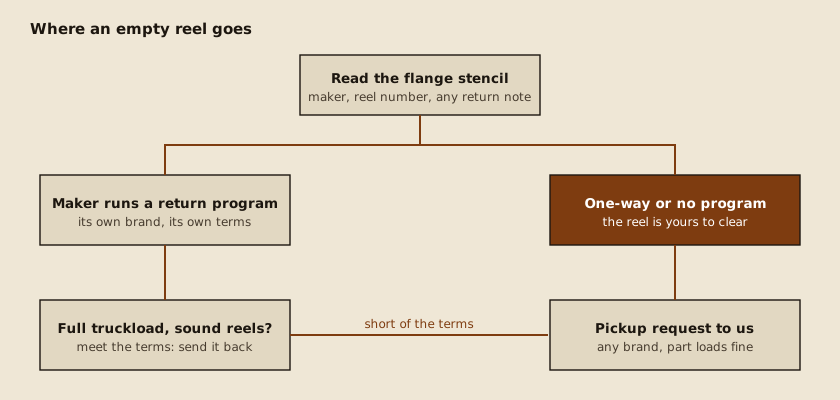
Steel and plastic reels follow separate routes: steel goes back to its maker where a policy exists, or to metal recycling, and plastic goes to reuse first.
What it costs
Disposal costs depend on the reels. A load with sound reels in common sizes often costs nothing, because the good reels pay for the truck. A load of only broken reels, or a single reel a long way from other pickups, usually carries a charge. Either way, we quote it before collection, so you can compare it with a container and decide.
Clearing a yard before a lease ends
Industrial leases in the Metroplex usually require the tenant to hand the yard back clear. Reels left behind become the landlord's problem, and the cost of removing them often comes out of the deposit with a markup. If you're moving out, count the reels early. A few weeks' notice gives time to sell the good ones and plan a pickup around the move, instead of paying a rushed premium in the final days. Tell us the handback date when you send the request and we'll plan to it.
Homeowners and small businesses
You don't need to be a contractor. If you've got a few reels left from a solar install, a fence job or a previous owner, send a request with the sizes and photos. Small loads in the Metroplex are usually collected when a truck is already nearby, which can mean waiting a little for a date, but it's the cheapest way to get them gone. If you'd rather keep one, our guides on building a spool table and moving large spools might help.
Questions
Will the city pick up a wooden spool?
Generally not as regular trash. Some bulky-item programs may take a small spool from a home; check your city's rules before you put one out.
How do I get rid of one big reel?
Send a request with its size and location. We'll tell you whether it can go on an upcoming route and what, if anything, it costs.
Can reels go in a construction dumpster?
Sometimes, if the hauler allows them, but they waste space and often cost extra. Recycling them is usually cheaper.
Request a pickup or a quote
Count and flange size are the two things that matter. The rest helps us plan the truck.