The networks behind the reels
Dallas-Fort Worth's grid is growing fast, and every expansion runs through reels. Oncor, based in Dallas, announced a five-year capital plan of about $36.1 billion for 2025 to 2029, including about $7.1 billion for 2025 alone. In the north and northwest, CoServ began as Denton County Electric Cooperative in 1937 and now serves more than 330,000 meters. Municipal utilities and other co-ops cover their own parts of the Metroplex. New subdivisions, data-centre services, substation builds, storm rebuilds and line upgrades all leave reels behind.
The reels utilities empty
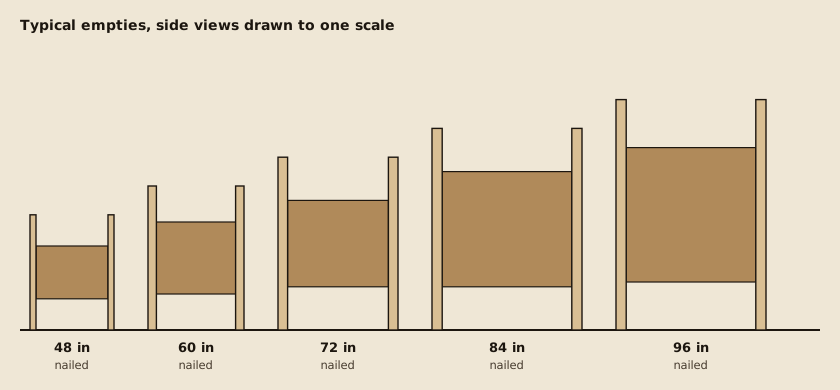
| Reel | Usually carried | Notes |
|---|---|---|
| 60 to 72 in nailed reels | Underground primary, secondary and service cable | The commonest utility reel |
| 84 to 96 in drums | Large primary cable, feeder exits, transmission | Heavy; machine-only |
| Steel reels | Conductor and specialty cable | Usually returnable to the maker |
| Smaller reels | Service drops, street lighting, controls | Mixed in with everything else |
Returnables and deposits
Utilities are more likely than other buyers to have reels on deposit or under a return agreement with the cable maker. Those reels go back under the utility's own contract, and we don't interfere with that. What we collect are reels the utility has released: one-way reels, reels a maker won't take back, damaged reels, and unclaimed steel reels where the utility confirms in writing that nobody else owns them.
Handling heavy reels safely
Utility yards already have the equipment and the safety culture for heavy reels, and that helps. Our trucks need firm ground to stand on, room for a forklift or a crane to work alongside, and clear overhead space, which matters a lot near energised lines. We'll ask about overhead hazards at the staging area when we plan the visit, and we load drums standing on their flanges, chocked and strapped through the arbor.
Storm seasons and rebuilds
North Texas storms, from spring hail and wind to the odd winter ice event, can bring weeks of emergency rebuild work. Crews pull cable around the clock, and empty reels pile up at service centres faster than usual. After the crisis, those yards need clearing. We can schedule extra pickups after a storm season to bring a yard back to normal quickly.
Co-op and municipal yards
Smaller co-ops and municipal electric departments empty fewer reels but face the same problem with less space. Collection a few times a year, timed with their construction season, usually works. For yards outside the core Metroplex, we'll combine visits with others on the same route to keep costs down.
Transformer and equipment reels
Not every reel on a utility yard carried cable. Some arrived with guy wire, ground wire, tracer wire or messenger strand, and some with conduit and duct. They're handled the same way: sorted by build and condition, with returnables set apart. Empty wire baskets and steel coils from overhead hardware go to metal recycling, not with the reels.
Contractor crews on utility work
Much utility construction is done by contractor crews working for the utility. In that case the reels may belong to the utility, the contractor or the cable maker, depending on the contract. We confirm with whoever controls the yard before collecting, and we'll take direction from the utility's project contact when there's any doubt.
Questions
Do you collect steel reels from utility yards?
Only once the utility confirms they're released. Most steel reels go back to their maker.
Can you lift 96 in drums?
Yes, with the right machine on site or brought by us. Tell us the drum sizes and what equipment the yard has.
Can pickups be arranged through purchasing?
Yes. We can work with a purchase order, a vendor set-up or whatever your procurement process requires.